What Happens When You Put Farmers First
Agro-commodities trade is, at its core, a relationship. In an ideal world, it serves everyone, from the farmer tending the soil to the consumer at the end of the chain. Yet, with the current global system structured around speed, scale, and price efficiency, that relationship has been relegated to secondary considerations.
But there is a more resilient design, one that treats the farmer as a partner rather than a mere supplier. This approach recognizes a fundamental truth: the health of a global supply chain is inseparable from the health of the origin communities. And it demands that everyone in the chain make empowerment a practical commitment: investing in farmer training, infrastructure development, and educational support.
That second version is the one we have tried to build at Sunbeth Global Concepts. It guides our mission; to empower origin producers with the financing structures, market access, technology, and education they need. And it points to a critical factor the broader industry must pay attention to; why you should put farmers first.
The Numbers the Industry Would Rather Not Talk About
Across West Africa, the majority of cocoa farmers in four of the largest producing countries (Cote d’Ivoire, Ghana, Cameroon, and Nigeria) still earn below the international poverty line.
The global cocoa industry was projected to be worth about USD 28.74 billion in 2025. The four largest public chocolate corporations made nearly $15 billion in profits from their confectionery divisions alone between 2020 and 2023. In that same period, the net incomes of cocoa farmers in Ghana fell on average by 16 percent and women farmers by nearly 22 percent.
$0.40–$0.45 / day — the average daily income of a West African cocoa farmer (2022 Cocoa Barometer), against a living wage benchmark of $13.50 / day
Elsewhere in Nigeria where the cocoa market is unregulated, farmers absorb the full force of price volatility with no protection. The Cocoa Barometer 2025 confirmed that even through the historic cocoa price surge of 2023–2024, most Nigerian smallholders did not benefit.
These are not abstract statistics. They show the lived reality of the people who produce the cocoa that becomes the chocolate on supermarket shelves across Europe, North America, and Asia. And they exist alongside an industry that has made sustainability pledges for decades without fundamentally changing this equation.
Why This Is a Supply Chain Problem
It is easy to mistake this argument as an appeal to ethics. But beyond that, it holds another compelling, and perhaps more urgent commercial logic that frames farmer poverty as a structural risk to the global food system.
When farmers cannot afford to invest in their own farms, yields decline. When yields decline, supply tightens. When supply tightens against rising global demand, prices spike, as the cocoa market dramatically demonstrated between 2023 and 2025, when prices hit record highs driven partly by decades of underinvestment in farm productivity across West Africa.
Our Managing Director, Olasunkanmi Owoyemi while speaking on a panel session at the 2024 World Cocoa Conference in Belgium, laid out the interconnected causes of the crisis: farmgate prices so low that farmers struggle to set aside enough funds to reinvest; ageing plantations that aren’t producing optimally; a generation walking away from farming because it’s tedious work with uninspiring returns.
The cocoa price volatiliy of 2024/2025 was not solely the result of a weather event. It was the accumulated cost of a model that extracted value from farming communities without returning enough to sustain them. The industry is beginning to reckon with this, but not fast enough.
What It Looks Like to Actually Put Farmers First
Our sustainability work did not begin as a marketing strategy. It began as a conviction: that you cannot build a business worth anything on top of communities that are deteriorating. We’ve originated over 200,000 metric tonnes of cocoa from Nigeria, Cameroon, and more recently Ghana, working with thousands of smallholder farmers, particularly in Nigeria. When their farms struggle, our supply chain struggles. When their communities weaken, so does the foundation of everything we do.
On the land, putting farmers first means getting improved, hybrid seedlings into their hands to resuscitate ageing plantations, alongside agroforestry training, agrochemical safety coaching, and support for sustainable farming techniques that improve both yield and soil health. It means building the traceability infrastructure, farm plot mapping, and farmer registration that allows us to stand behind our supply chain and meet global standards like the EU Deforestation Regulation.
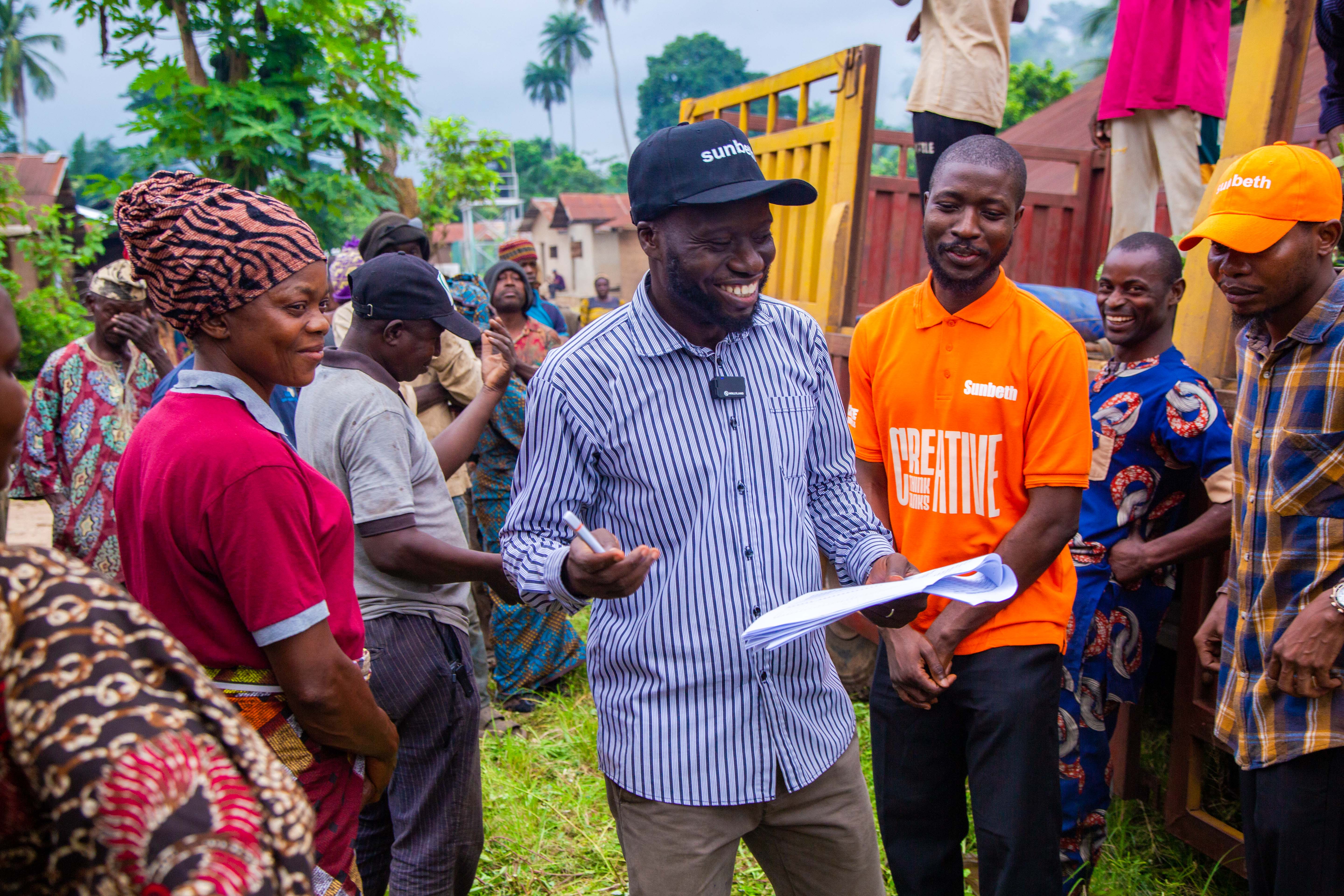
In communities, it means improving access to water stations across several rural settlements, giving over 20,000 people access to clean water. It means running child labour sensitisation campaigns across farming communities, engaging the adults, and distributing educational materials to children at risk, because child labour is at root an income problem, and it cannot be addressed without removing the conditions that fuel it.
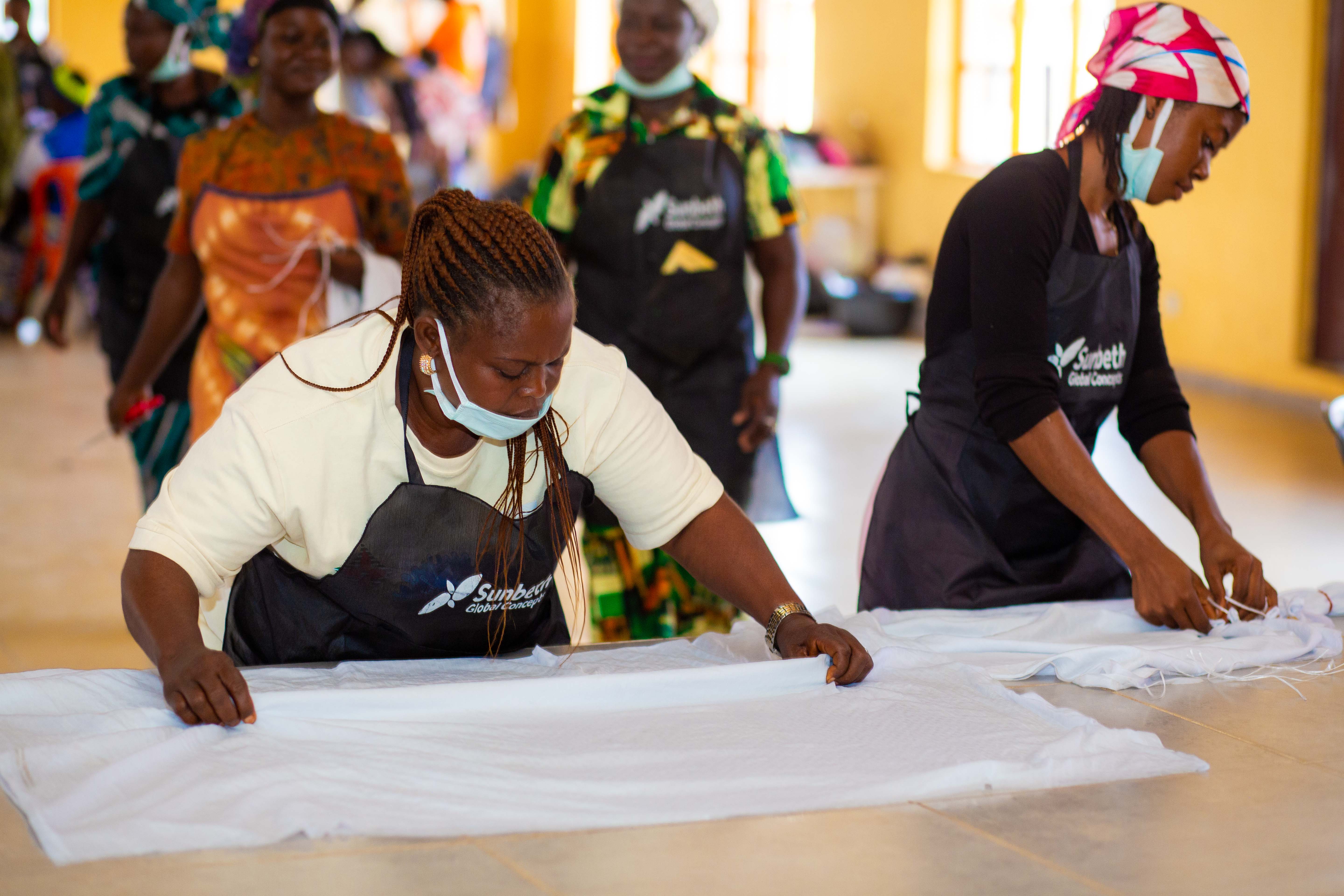
And it means our Women's Empowerment Initiative, now in its fourth year, which in 2025 brought together 150 women across Ondo and Cross River States for hands-on vocational training in local crafts and designs, followed by business coaching and starter kits to turn skills into enterprises. Not handouts, but the foundation to begin.
What the Industry Needs to Understand
The evidence is clear that this kind of investment works. Research in Côte d'Ivoire shows that when targeted interventions reach farmers effectively, fair prices, seedlings, income diversification, the share of farmers living in extreme poverty can fall from 58 percent to 17 percent over a few years. The interventions are not mysterious. They are practical, consistent, and relational.
The direction of global trade regulation reinforces the commercial logic. The EU Deforestation Regulation, rising living income benchmarks, and tightening traceability requirements are converging on the same conclusion: demonstrably ethical sourcing is becoming a baseline, not a premium. Companies that have built genuine relationships with farming communities, that can show verified, farm-level sustainability, will be ahead.
But beyond regulation, there is an agricultural reality that no compliance programme alone can fix: an ageing farmer population, deteriorating plantations, and a younger generation struggling to see a future in farming. These problems compound over time. They do not wait for the next reporting cycle. And addressing them requires exactly the kind of long-term, community-rooted investment that the industry has often been reluctant to make.
As a company, we have a lot of work ahead of us. But we believe, from what we have seen and learned, that a trade relationship worth having is one that works for both sides. That the farmers who grow the world's food deserve to eat well themselves. And that putting them first is not a strategy, it is a responsibility.
One the industry, as a whole, needs to take more seriously.

.jpg)