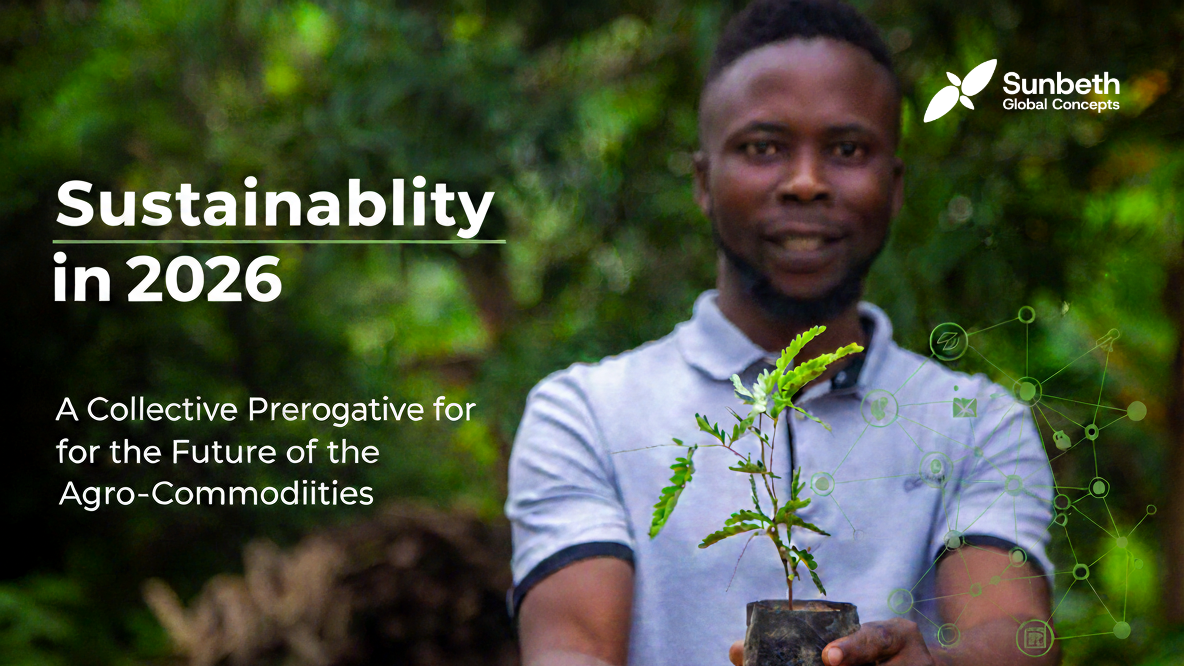
The sustainability landscape in 2026 looks markedly different from what it was a few years ago. New regulations are taking effect across major markets, consumer expectations have evolved beyond greenwashing, and supply chain transparency has moved from a box-ticking exercise to a strategic business requirement.
For companies like ours, operating across sourcing regions like West Africa and supplying to Europe, Asia, and North America, sustainability is no longer optional; it is structural to long-term success.
As global supply chains expand and markets tighten environmental, social, and governance (ESG) expectations, 2026 stands at the intersection of precedents we’ve set and possibilities we must now scale.
So, what has sustainability become, and where is it going next?
The Precedents: How Sustainability Has Been Redefined
1. Evolution from Compliance to Strategy
In its early years of widespread adoption, many organisations implemented sustainability largely for compliance, often treating it as a box to check and a requirement to meet regulations. But it’s increasingly being embedded in core business strategy.
Companies, particularly exporters from West and Central Africa, now integrate sustainability into:
- Procurement decisions
- Supplier selection and development
- Logistics optimisation
- Market positioning
This shift has redefined sustainability from a reactive measure to a value-creating effort that strengthens supply resilience and builds trust across international markets.
2. Traceability Became Non-Negotiable
Markets, primarily Europe, are increasingly demanding proof, not promises of sustainable farming practices. Regulations and consumer expectations have made full traceability across commodity supply chains essential.
Precedents now include:
- Digital mapping of farms and aggregators
- Supplier audits
- Deforestation-free and ethical sourcing verification
For sourcing regions like West Africa, traceability is being redefined from a challenge into an opportunity to elevate local producers into global value chains.
3. Sustainability Became Collaborative
Sustainability success is no longer the responsibility of one department in an organisation. It has morphed into a collective prerogative of multiple players across supply chains. These include;
- Local farmers and groups
- Licensed buying agents
- Offtakers/ processors
- Government/regulators
This precedent shows that sustainability scales faster when it is co-created, incorporating several elements, such as engagement in host communities, capacity building, and resource support, all of which now form essential pillars of responsible sourcing.
The Possibilities: What Sustainability Can Become in 2026 and Beyond
Regenerative Sourcing Ecosystems
Beyond "doing less harm to the environment and remediating child labour," sustainability in 2026 pushes toward proactive responsibility and prevention over correction.
At Sunbeth Global Concepts, this approach is operationalised through our dedicated sustainability team and structured farmer relationship system. Our field officers work directly with cocoa farmers, providing hands-on training in sustainable farming practices and maintaining ongoing relationships that extend well beyond procurement transactions. This isn't a periodic audit; it's a continuous engagement that builds capacity at the source.
This model demonstrates what regenerative sourcing can look like in practice:
- Farmer empowerment through accessible training, equipment, and inputs that make sustainable, ethical farming economically viable
- Income stability and long-term continuity that give farmers reason to invest in better practices
- Climate-smart agriculture that protects both yields and ecosystems
When field officers are embedded in farming communities rather than parachuting in for compliance checks, the supply chain shifts from a system for extracting value to a contributor to local economic development. The relationship becomes the infrastructure.
Sustainability as Market Power
In 2026, sustainability is no longer just a means for businesses to protect themselves from regulators; it’s fast becoming a strategic imperative.
Companies that demonstrate ethical sourcing, societal impact, and transparent reporting will likely gain:
- Easier market access
- Stronger brand equity
- Premium buyer relationships
- Long-term investor confidence
The possibility is turning sustainability into a strategic advantage, not just a reporting obligation.
Local Impact, Global Standards
One of the most powerful possibilities is aligning local realities with global expectations.
Across many platforms and conversations, industry stakeholders are advocating for a comprehensive end-to-end integration of the supply chain. The goal is to ensure that global standards are not dissociated from local realities, especially in grassroots communities where the majority of the commodities are produced.
In action, companies are taking on responsibilities to:
- Educate local partners on global best practices
- Build infrastructure to enable the adoption of global best practices
- Strengthen compliance readiness
- Elevate African commodities within premium global value chains
Through these measures, sustainability is becoming the bridge between community development and global competitiveness.
Sustainability in 2026 will be more than a trend
The conversation around sustainability has matured. In 2026, the talking point is no longer “Why we should be sustainable” but rather “How scalable, measurable, and impactful is our sustainability strategy?”
For companies expanding across continents, sustainability defines:
- Risk management
- Market access
- Brand reputation
- Long-term profitability
Making It Real: From Vision to Action
The gap between sustainability commitments and actual practice remains the industry's greatest challenge. The companies that will thrive in this landscape are those that view sustainability not as a compliance exercise but as a comprehensive operational philosophy.
For sourcing networks spanning from West Africa to global markets, the path forward requires balancing diverse regulatory environments, cultural contexts, and operational realities. But the precedents of the past few years have shown what's possible when companies commit to doing business differently.
The precedents have been set. The possibilities are now ours to pursue.
.jpg)