How soil loss is reshaping West Africa's agro-commodities landscape
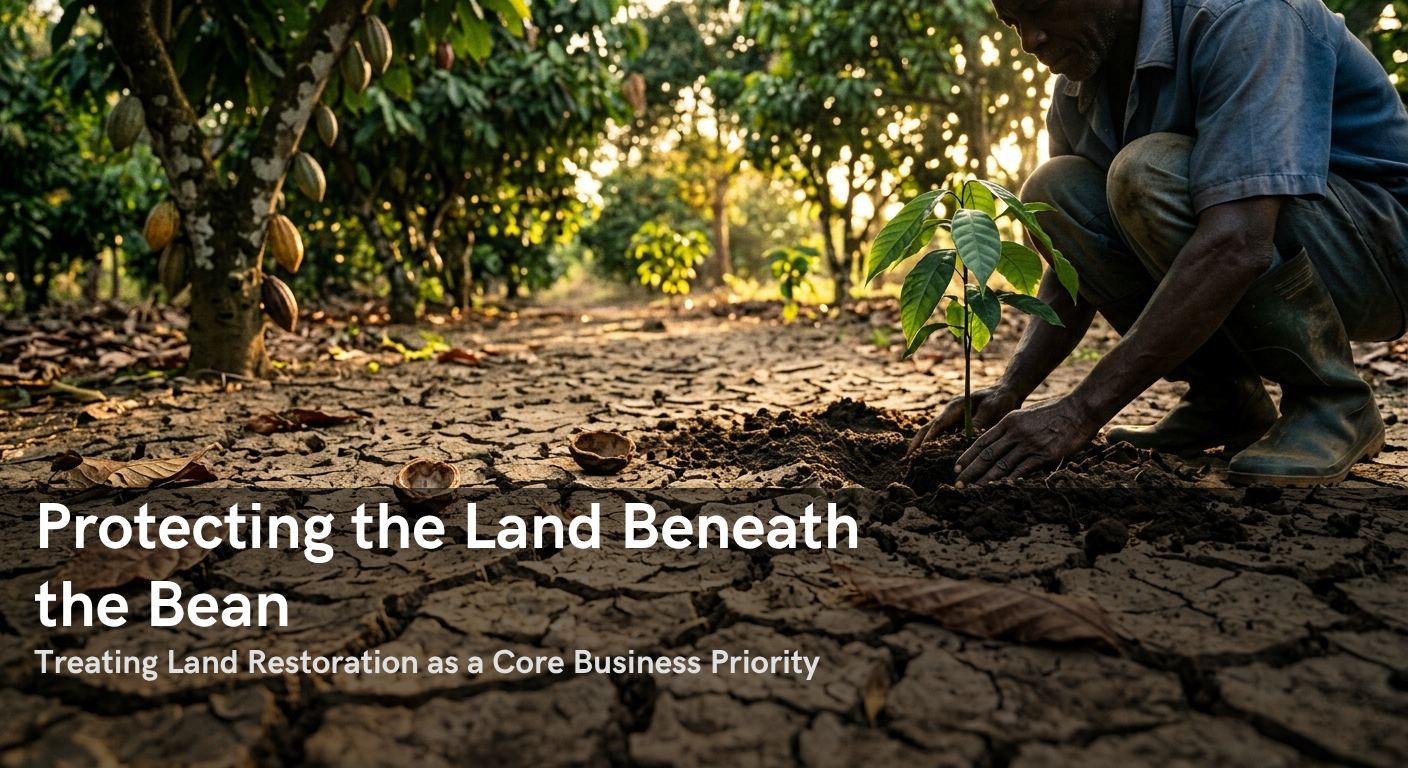
Imagine a farmer walking through his farm at the start of what should have been the rainy season. The clouds offer no promise; the soil beneath his feet feels dry and compacted. Nearby trees that once provided shade and retained moisture have long disappeared.
You had to imagine it, but for many farmers in West Africa, this scenario is fast becoming a reality. Across farming communities in Sub-Saharan Africa, shifting climate patterns are intensifying land degradation, drought, and desertification.
While these changes often unfold slowly, their consequences are felt across the entire agro-commodities value chain.
Cocoa as an example
According to Sedex, West Africa produces more than two-thirds of the world's cocoa, with millions of smallholder farmers across Ghana, Côte d'Ivoire, Nigeria, and Cameroon depending on the crop for income. But the land supporting that production is under mounting pressure.
Between 1988 and 2007, West Africa lost 2.3 million hectares of forest to cocoa cultivation, according to the World Bank. As forests gave way to farms, the region also lost canopy cover, soil protection, and the natural systems that help retain moisture and regulate local rainfall. This claim is further supported by the discoveries of Researchers at Sustainability Science who found that as cocoa farmers replaced forest with farmland across vast areas, they contributed to a further drying of the climate in a positive feedback cycle. Less canopy meant less evapotranspiration, which meant less rainfall, which meant drier soils, which made the remaining trees more vulnerable to the next dry season.
Recent reports from Ghana show how severe this can become. As reported by PBS NewsHour, one Ghanaian farmer described yields falling from a past high of300 bags annually to just 50 bags in 2025: a collapse driven by years of climate stress accumulating on already-thin soil. He is not an outlier. He is the direction of travel, unless something changes on the ground.
The World Day to Combat Desertification and Drought provides a useful reminder that these challenges are not distant environmental concerns. They are unfolding now across the landscapes that feed global supply chains.
What the Soil Is Losing
To understand the stakes, it helps to understand what healthy soil actually does. Organic matter in well-managed farmland improves porosity, allows plant roots to penetrate, regulates water movement, and supports the microbial activity that cycles nutrients back into the earth.
In cocoa plantations, shade trees provide deep root systems that stabilise soil structure, reduce erosion, enhance infiltration, and replenish the groundwater reserves that cocoa trees draw on when the rains stop.
Remove those trees, and the soil's capacity to manage water diminishes with them. According to research published in Soil Science Cases, each metric ton of dry cocoa harvested removes an estimated 24 to 45 kilograms of nitrogen from the soil. Over years of continuous monoculture, the land becomes progressively more exposed to the extremes it was once buffered against. Drought hits harder because there is nothing in the soil to hold what little moisture falls. Heavy rain causes runoff and erosion because there are no roots to slow it down. The farm becomes fragile precisely because it was made to be maximally productive.
This is the paradox at the heart of the desertification crisis in many of Sub-Saharan Africa's agricultural belts: the pursuit of yield, without attention to land health, eventually destroys the yield capacity.
SGC's Response: Restoring Farms from the Ground Up
At Sunbeth Global Concepts, we start with a simple premise: you cannot source cocoa sustainably from land that is deteriorating. That is why the Better Planet pillar of our Orange Cocoa sustainability framework focuses on restoring the farms and landscapes our supply chain depends on.
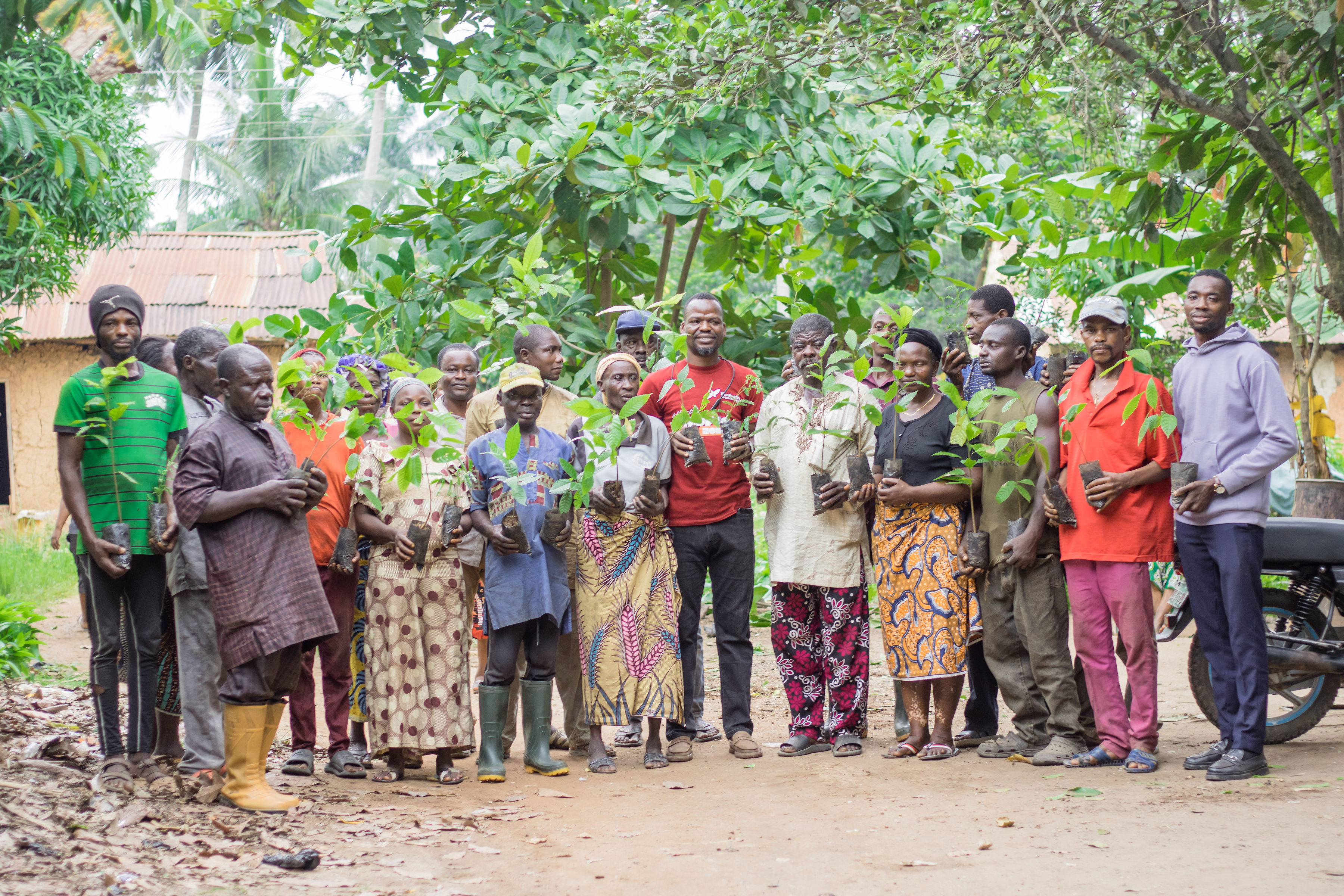
A key expression of this commitment is our seedling distribution programme. Through it, SGC has distributed more than 75,000 cocoa and shade tree seedlings to farming communities within our sourcing network.
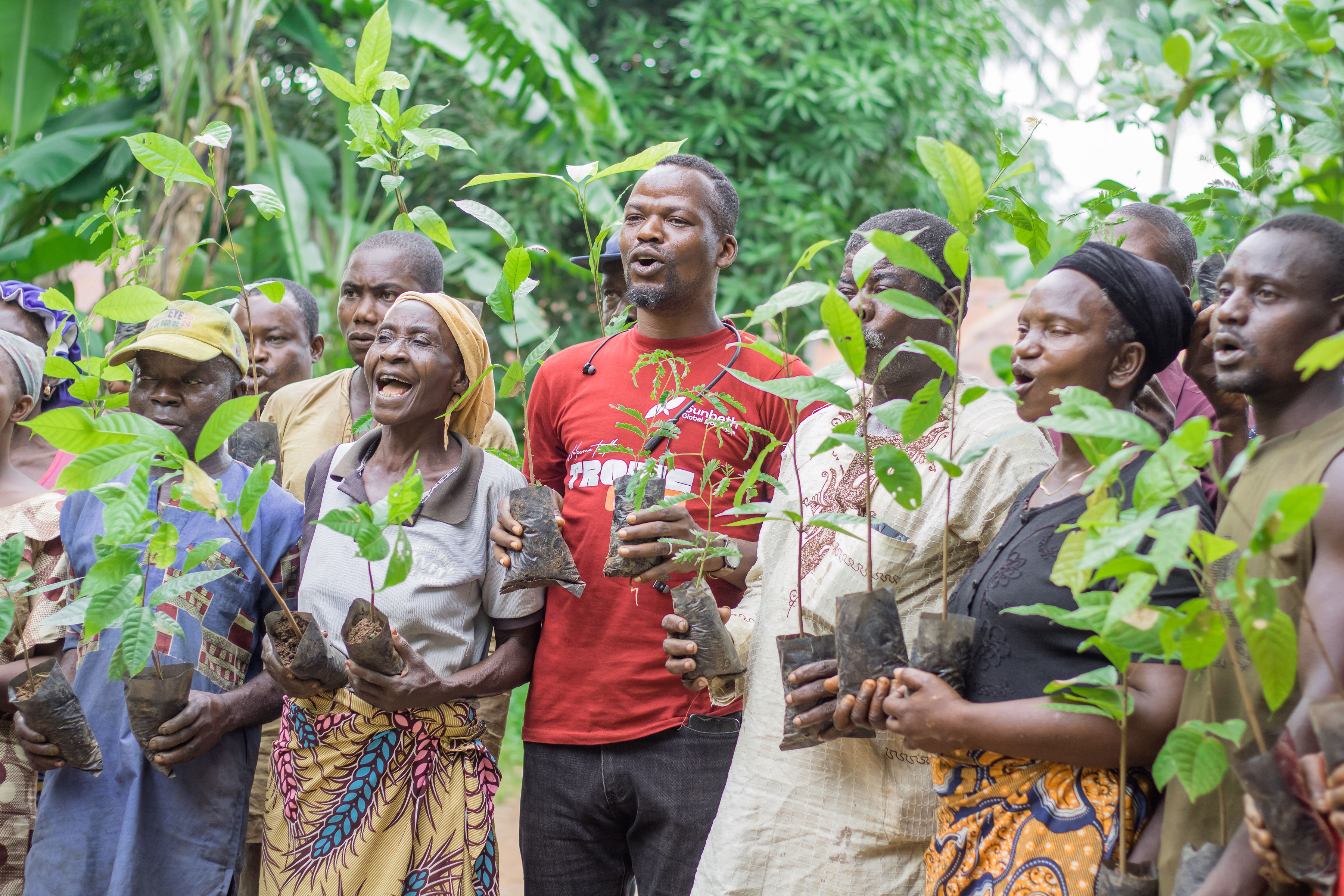
The cocoa seedlings help farmers renew ageing farms, many of which are past peak productivity. By supporting replanting with improved varieties, SGC helps farmers rebuild yield potential without turning to the destructive cycle of clearing new forest to start again.
Shade tree seedlings address the land restoration challenge directly. When properly integrated into cocoa farms, shade trees cool the microclimate, reduce heat stress, add organic matter through leaf litter, stabilise soil structure, and improve the soil's ability to retain rainfall. In an era of erratic weather, this makes a farm more resilient before the next drought arrives.
Climate-Smart Agriculture: Beyond the Seedling
Seedling distribution is the foundation; SGC's Better Planet programme integrates climate-smart agriculture (CSA) practices that support farmers in managing their land over the full growing cycle. This includes guidance on pruning and canopy management, soil health monitoring, and water conservation techniques that extend the productive value of rainfall.
Critically, these are not practices imposed from outside. We work within farming communities, building understanding of land health as a precondition for farm income.
The results are visible in comparable programmes across the region. According to the World Bank, Ghana's Cocoa Forest Restoration Programme, which integrates shade tree planting with sustainable farm management, has seen the average productivity of participating farms increase from 400 kilograms per hectare to 600 kilograms per hectare since 2019.
That is the model SGC is building toward at the community level: farms that yield more because the soil beneath them is healthier, not farms that yield more in the short term at the cost of the land.
Land Health Is Supply Chain Resilience
The commercial case for what SGC is doing is not separate from the environmental case. It is the same case, looked at from a different angle.
Buyers sourcing cocoa from degraded, climate-exposed origins face more than environmental risk; they face price volatility, supply uncertainty, and growing regulatory pressure around deforestation and responsible land use.
Desertification and land degradation in West Africa's farming regions did not happen overnight, and they will not be reversed by a single intervention. But they can be addressed farm by farm when supply chain actors treat land restoration as a business priority, not a CSR footnote.
We are doing this work because the land beneath the bean is a vital variable in the future of West African cocoa. Partners who understand this have an opportunity to support a cocoa supply chain that is more productive, more resilient, and better prepared for the climate realities ahead.
We invite cocoa buyers, chocolate manufacturers, and ingredient partners to learn more about SGC's sustainability commitment, Orange Cocoa.

.jpg)