.png)
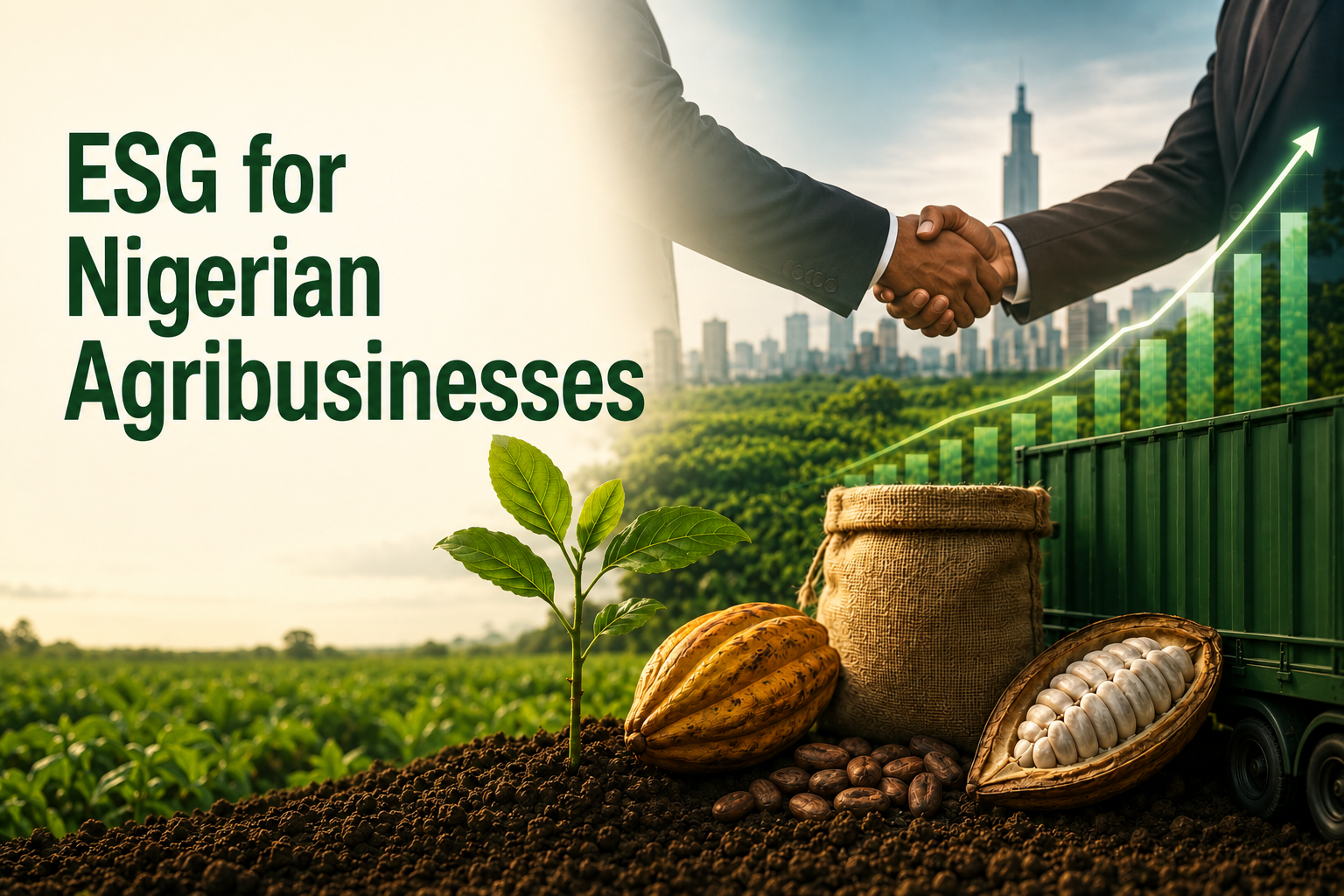
For years, climate resilience has been boxed inside the "sustainability narrative." That framing is well-intentioned and important, but the subject has outgrown it. Climate has quickly become a strategic priority for businesses, especially in the agro-commodities space.
Today, climate action directly shapes competitiveness, trade access, and operational viability across the agribusiness value chain. In the market, processors and consumers are tightening sustainability and traceability requirements. On the finance front, ESG-conscious investors are folding climate risk into their capital decisions. And across the wider ecosystem, regulators are rewriting the rules with new policies.
In short, tangible climate action has moved beyond environmental conversation to become a business imperative for agro-commodity exporters and the wider food production industry in West Africa.
Yet many players are still framing this purely as a sustainability issue, without connecting it to their bottom line. So we set out to make the commercial case for climate action in the agro-commodities space. The result is our new publication, built to answer one question: How does climate action actually translate into business results?
Introducing Our New White Paper
We're proud to announce the launch of our first white paper, Climate-Smart Agriculture: Driving Resilience and Sustainable Agribusiness Growth.
Most conversations on climate-smart agriculture stop at the concept; they acknowledge the problem without connecting it to commercial reality. We wanted to go further. So we researched the field, engaged the agro-commodity value chain, and built a paper that bridges the gap, linking climate-smart practices directly to profitability, resilience, and long-term growth.
To take one example: the European Union Deforestation Regulation has made traceability a legal condition of market access for commodities such as cocoa. For exporters, this means farm-level visibility is no longer just a sustainability requirement; it is now part of the infrastructure needed to keep selling into high-value European markets. But traceability isn’t the end goal, it’s only a part of a broader objective to curtail the effects of deforestation and encourage measures that will contribute to the reversal of climate change including afforestation and climate smart agricultural practices.
This is one of the systems turning climate action from a cost line into a competitive edge.
Designed to Give a Full Value Chain Perspective
Climate change doesn't hit agribusinesses at a single point; it touches everyone along the chain. This paper looks at the full picture: the smallholder farmer, the aggregator, the exporter, and the global buyer, and examines the role each plays in advancing climate-smart agriculture.
This isn't a one-size-fits-all view. It's a breakdown of how climate resilience shows up and matters differently at each stage of the chain, and what that means for the people and businesses operating there.
What's Inside the Paper
The white paper covers:
- Why climate resilience now drives competitiveness, trade access, and operational viability
- An honest assessment of the climate and commercial pressures facing West African agribusiness
- The business case for climate-smart agriculture across the value chain
- Practical strategies for soil health, water management, and data-driven farming
- A strategic outlook for exporters, investors, regulators, and partners operating in emerging markets.
At its core, the paper moves past the old trade-off between productivity and sustainability and reframes climate-smart agriculture as what it has truly become: a driver of margin, market access, and long-term commercial advantage.
This white paper isn't just commentary, it's a call to action for policymakers, investors, agribusinesses, and partners who believe in the future of African agriculture.
We invite you to read it, engage with it, and join us in building amore resilient agricultural future. The future of food, and of our economies, depends on the choices we make today.
We'd love to hear your perspective on the ideas it puts forward
.jpg)